
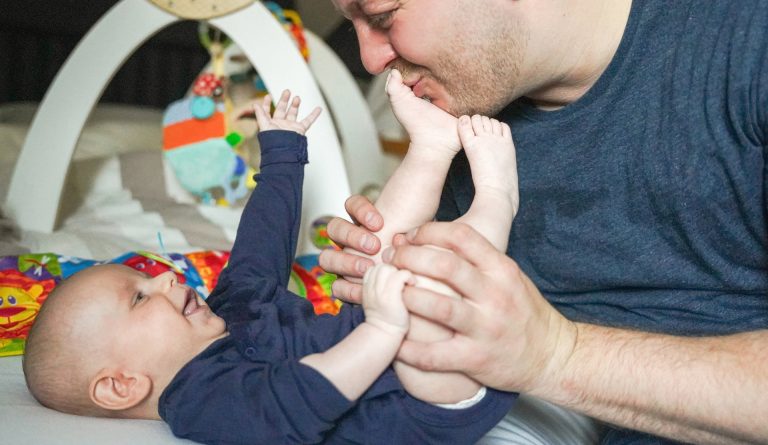
Before a baby can speak, crawl, or even focus their eyes, they already understand the language of touch. It’s why touch matters so deeply for babies — a cuddle after a nap, a gentle pat during feeding, a soft hand resting on their back. These moments say you are safe, you are seen, you belong.
Long before playthings and picture books, touch is how babies begin to make sense of the world and to build trust in it.
Touch as a First Teacher
From the very first days of life, babies learn through their senses. Every texture, warmth, and rhythm tells them something about their surroundings — and about the people who care for them. When you hold your baby close, their heartbeat steadies, their breathing deepens, and stress hormones drop.
Research from the Canadian Paediatric Society shows that regular skin-to-skin contact helps lower babies’ stress levels and supports healthy brain and emotional development.
It’s not simply comforting; it’s biological communication — a wordless conversation between you and your child’s developing nervous system.
How Practitioners Continue That Connection
At Blue Windmill Day Nursery in Rugby, our practitioners understand how much this early sensory world matters. When parents are away, we continue to nurture babies through gentle, responsive touch — helping them feel held and secure throughout the day.
That might mean a calm hand on the shoulder during nappy changes, a soft stroke on the back as a baby drifts to sleep, or a warm cuddle when they wake. Each moment is unhurried and intentional. The goal is never to replace a parent’s touch, but to make sure every baby continues to feel connected and comforted in their absence.
Touch, Trust and the Growing Brain
Every act of touch helps build neural pathways that support emotional regulation and learning. It’s why babies who are held often tend to feed and sleep better, and why reassurance through gentle contact helps toddlers manage big emotions.
In nursery settings, practitioners use this understanding to help children transition between home and care — knowing when a pat, a hug, or simply sitting nearby can make all the difference. These moments of attunement build the foundations of trust that last well beyond the nursery years.
Babies with Additional Needs
For babies with sensory sensitivities or special needs, touch can sometimes feel overwhelming rather than soothing. Our team take time to learn each baby’s individual cues — noticing which textures, pressures, or positions help them feel calm. Research into sensory-aware environments shows that calm, responsive spaces help young children regulate emotions and return to focused play (read more here).
By adjusting lighting, pace, and physical closeness, we make sure every baby can engage at their own rhythm.
A Sense That Lasts a Lifetime
Touch doesn’t stop being important when babies grow into toddlers — it simply changes form. A reassuring hand to guide them or a high-five after a brave step all remind children that connection is still there.
Through every small, caring gesture — at home and at nursery — children learn one of life’s most important lessons: the world is a kind place to be explored.